B12 Solipsism

Spreading confusion over the internet since 1994

Archive for the ‘42nd_Ward’ tag

MillerCoors selects Chicago HQ

without comments

MillerCoors1 is moving headquarters from Milwaukee to Chicago:

A River never forgets
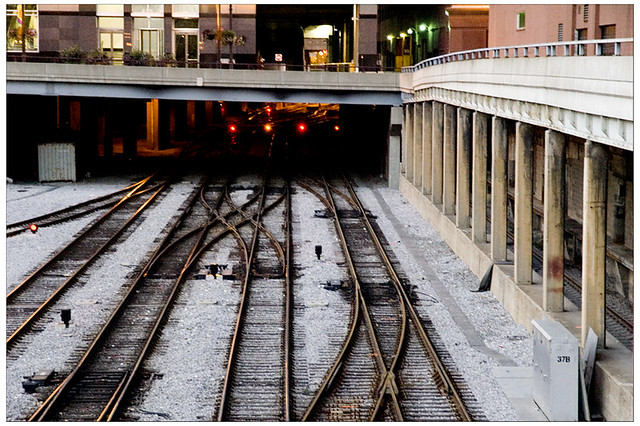
[Chicago River just south of Jackson]

MillerCoors announced Wednesday that it has signed a 15-year lease agreement for nearly 130,000 square feet of office space for its new headquarters location at 250 S. Wacker Drive in downtown Chicago.

In July, following the closing of a transaction to combine the U.S. and Puerto Rico operations of Milwaukee-based Miller Brewing Co. and Coors Brewing Company of Golden, Colo., the newly formed MillerCoors selected Chicago as the home city for its corporate headquarters.

MillerCoors selected the West Loop high-rise office building because of its “dynamic environment for employees and visitors, access to public transportation, green space, and surrounding amenities,” MillerCoors management said.

The new location provides a unique opportunity to establish MillerCoors identity as a beer company in downtown Chicago, MillerCoors chief executive officer Leo Kiely said.

“We are a beer company and you’ll know that as soon as you walk through the doors of our Chicago headquarters,” said Kiely. “The offices will showcase our brands and create a work environment that inspires our employees’ passion for beer.”

MillerCoors will be the largest tenant in the building housing nearly 400 employees on eight floors. The headquarters will house a majority of MillerCoors senior executives, as well as marketing, human resources, legal, finance, information technology and communications divisions.

Chicago-based architecture and interior design firm VOA has been selected for the interior design and construction of the headquarters.

As part of the project, VOA will develop sustainable and environmentally responsible designs.

[From MillerCoors selects Chicago headquarters site - The Business Journal of Milwaukee: ]

(h/t Colonel Tribune’s twitter feed)

Minor quibble, I consider the Chicago River the demarcation between the Loop and the West Loop, and 250 S. Wacker is on the east of the river, not the west.


View Larger Map

Chicago River Taxi is Yellow
[Chicago River, near Jackson and Wacker]

Footnotes:
  1. what a lame-o name []

Written by Seth Anderson

October 29th, 2008 at 11:21 am

Posted in Business, Chicago-esque

Tagged with , ,

Long Strange Trip of Bill Ayers

with 2 comments

Fascinating1 article published in the Chicago Reader, circa 1990, about the man John McCain is trying his best to link to Barack Obama.

Haymarket Riot memorial, old version.
[The Haymarket Riot Memorial plaque that was placed at the Haymarket Riot location, 147 N. Desplaines, Chicago, IL 60661, after Bill Ayers (link to his blog) blew up the memorial to policemen. Now replaced by yet another memorial]

The students are already seated, quiet and polite in perfectly aligned rows of chairs, when Bill Ayers walks into the classroom.

It’s a Monday-evening political-science class at the University of Illinois at Chicago, a class devoted to the study of the “impact of the 60s on the 90s.”

“We’re very lucky to have Bill Ayers here,” says Victoria Cooper-Musselman, the instructor. “Bill was an active player in the 60s. You read about him in all the books.”

Ayers smiles, a boyish grin, and steps to the podium. He’s 45, but doesn’t look much older than most of the students. He wears his curly blond hair over his ears, with a rattail down the back. His T-shirt reads: “America is like a melting pot: The people at the bottom get burned and the scum floats to the top.”
He wears shorts.

“To me it’s funny that the 60s are studied,” Ayers begins. “I get rolled in like a Civil War veteran. I feel strange.”

The students laugh. As he continues, they fall quiet. His voice is raspy, sexy, a little mesmerizing. He’s completely at ease.

The story he tells, a condensed version of his life, is a tale of extremes. He wasn’t just any all-American, suburban-bred boy; his father, Thomas Ayers, ran Commonwealth Edison. And he didn’t just rebel; he was a leader of the Weathermen, the most radical of all 1960s revolutionaries, who among other things bombed the Pentagon and the U.S. Capitol and sprung Timothy Leary from jail.

For three years Ayers’s wife, Bernardine Dohrn, was on the FBI’s list of ten most wanted criminals. They spent nearly 11 years as fugitives, living on the run “underground.”

“We were anarchists,” he tells the class. “We were willing to get thrown out of school. We were willing to go to jail. I make no apologies. There comes a time in your life when you face a moral challenge. You have to ask yourself: ‘Will I bow to conformity and accede to the world as it is, or will I take a stand?’”

These days, he takes his stands aboveground. He’s an assistant professor of education at UIC. He works in the university’s elementary teacher education program. His specialty is school improvement. He’s written one book on early childhood education, and he’s writing another about teaching. He publishes regularly in scholarly journals. Each year he trains dozens of would-be teachers for private, public, and parochial schools.

[Click to read more from Reader Archive--Extract: 1990/901109/The Long, Strange Trip of Bill Ayers He wasn't just any suburban-bred all-American boy; his father ran Commonwealth Edison. And he didn't just rebel; he was a leader of the Weathermen, the group that bombed the Pentagon and sprung LSD guru Timothy Leary from jail. Now he's an assistant professor of education at UIC and an influential thinker in the school reform movement. And yes, he would do it all again]

Personally, the McCain smear is so weak to be laughable. I mean come on, Obama was 8 when Ayers was on the lam. Not every politician is Billy Pilgrim, able to look into the past of everyone they meet like the past was a Chinese New Year parade float. Now, McCain’s guilt by association trick actually works quite well on connections between McCain and Keating - actually as some wag put it, the McCain Keating connection is more of a “guilt by guilt” association.

(h/t Whet Moser via Twitter)

Footnotes:
  1. albeit horribly formatted []

Written by Seth Anderson

October 6th, 2008 at 4:42 pm

Stairway to a Two Bedroom

without comments

Stairway to a Two Bedroom, originally uploaded by swanksalot.

R+D 659 is overpriced, really

still working on our RFP1that never ends. 2 o’clock today might get some relief2

Footnotes:
  1. Request For Proposal(s) []
  2. well, actually 3, after the call []

Written by swanksalot

October 6th, 2008 at 7:38 am

Posted in Photography

Tagged with , ,

Yet More Development in the West Loop

without comments

Received this letter in the mail the other day.

In accordance with the requirements for an amendment to the Chicago Zoning Ordinance, please be informed that on or about September 3, 2008, the undersigned will file an application for a change in zoning from DC-12 Downtown Core District to a DX-12 Downtown Mixed-Use District and then to a Residential-Business Planned Development on behalf of JRC 108 Jefferson LLC, whose address is 401 North Michigan Avenue, Suite 1300, Chicago, Illinois 60611 (the “Applicant”), for the property located at 108 North Jefferson Street, Chicago, Illinois (the “Property”). The Property is owned by the Applicant and JRC Jefferson DAS, LLC, JRC Jefferson JJO, LLC and JRC Jefferson EMP, LLC. …

The Property is currently improved with a non-accessory surface-level parking lot. The Applicant proposes to construct a 41-story building on the Property containing ground floor business uses, five floors of office space, accessory off-street parking spaces and 311 dwelling units, which must be processed as a Planned Development pursuant to the Chicago Zoning Ordinance.

108 North Jefferson
[108 North Jefferson, Chicago, IL 60661]

Oh boy, more people are moving in, Ma. Where does all the cash come from to convert every single parking lot into a 40 story high rise? I thought real estate development was in a down-turn? There is the Catalyst, right across the street from this newly proposed building, R+D 659, the Emerald, and probably others. An amazing boom happening in my zip code.

Written by Seth Anderson

September 22nd, 2008 at 9:15 pm

Michigan Avenue bridge to close during overnight hours

without comments

First I heard of this, was there prior notice?

Bridge Closed

Starting Thursday evening, Sept. 11, and continuing for a week, the Michigan Avenue Bridge over the Chicago River will be closed to all traffic during the overnight hours.

The bridge will close from 11 p.m. to 6 a.m. the following day. The closures will allow crews to work on the new river-level walkway beneath the bridge—the first connection for the Chicago Riverwalk.

During the closures, crews will install sheet piling under the bridge to create the space needed to build the walkway.

Pedestrian traffic will be detoured to Wabash and Columbus streets. CDOT will post signs and information boards to direct pedestrians.

To accommodate pedestrians, local tour boat operator Wendella Sightseeing will provide shuttle service across the river during the closure on an as-needed basis.

The new under-bridge connection will provide an uninterrupted path from Lake Michigan to Wabash. The project is expected to be complete by year’s end.

[From City of Chicago - Michigan Avenue bridge to close during overnight hours]

Bike the drive2

Brendan Reilly’s office adds:

The project includes removing and replacing all the limestone from the stairway, much of which is cracked and deteriorated. The area will be closed to pedestrians during construction.

The Chicago Department of Transportation will be working on the bridge nightly from approximately 11 pm to 6 am. Work the evening of September 11th will involve preparation for the sheet pile driving operations that will take place the evenings of the 12th through the 18th.

Because of the evening hours and location of this construction project, CDOT will make every effort to reduce noise and traffic impacts. CDOT has directed its crews to mute audio signals to reduce noise disturbances, but the vibratory hammer that will be used for splicing sheets for the pile driving operations will produce noise that will likely impact neighboring buildings.

Written by Seth Anderson

September 10th, 2008 at 6:48 pm

Posted in Chicago-esque

Tagged with , ,

Throw me a bone

without comments

Nice. I suspect there was some shady doings when our building was turned into Condo, circa 1997. Over the years, we’ve discovered all sorts of not-to-code problems (wrong size electrical conduit, faulty plumbing, etc.), I would be curious to see who the inspector was who signed off on the obvious not-code elements.

A one-time City of Chicago plumbing inspector testified Tuesday that he took bribes “almost daily” from contractors and passed a cut of some of the payoffs to his supervisor in the Buildings Department.

Travis Echols, testifying at the trial of the supervisor, Gregory Toran, told a federal jury how Toran reacted when he was promoted and became an office-bound boss unable to conduct inspections in the field.

“He said, ‘Throw me a bone,’ ” testified Echols, adding that meant to cut Toran in on bribes Echols would receive to sign permits that landed on Toran’s desk.

Toran went on trial Tuesday at the Dirksen U.S. Courthouse on charges of attempted extortion, accused of pocketing hundreds of dollars in bribes that Echols told him was coming from contractors who wanted subpar work overlooked. Turning a blind eye to violations was just part of the job and meant hundreds of dollars in extra cash, Echols said.

[From Former city inspector testifies he took bribes and gave a portion to his supervisor -- chicagotribune.com]

Skull and Concrete
[Skull and Concrete]

No wonder the housing market is in such flux.

Written by Seth Anderson

August 27th, 2008 at 10:05 am

Chicago as Houston

with one comment

Houston is famous for having a patchwork quilt of zoning regulations, and a subsequent crazy mess of an urban jungle. If Chicago Aldermen don’t watch out, we’ll end up in the same dire predicament: having a city without rhyme or reason, loved by nobody except developers, and their politician puppies.

In the ongoing “Neighborhoods for Sale” series, the Tribune has documented an insiders’ game in which aldermen rake in millions of dollars in campaign cash from developers, zoning lawyers and architects while often overriding the concerns of homeowners and city planners. Out-of-scale buildings leave existing homes in their shadows, the result of nearly 6,000 council-approved zoning changes in the last 10 years that have transformed neighborhoods.

The results of this patchwork approach to development have been jarring, with mini-mansions replacing modest bungalows and condo blocks rising over increasingly traffic-choked streets.

The Tribune has found that zoning rules have been ignored or changed to make it easier for developers and harder for residents to have a meaningful say in what gets built on their streets.

Developers commonly fail to put up signs required by law to notify neighbors of proposed zoning changes. Neighbors frequently don’t get letters notifying them of nearby projects.

And if they manage to learn of pending proposals and attend the City Hall hearings, they may find themselves prohibited from asking questions of developers and aldermen.

For a street-level view of how the code really works, look at the 50th Ward and the story of the proposed seven-story senior housing complex the City Council recently approved at the behest of Ald. Bernard Stone.

[From Who calls the shots in your back yard? Not you. -- chicagotribune.com]

Catholic Charity aged
[A now-destroyed building, replaced by a 20 story residential building, still being constructed, called R+D 659]

There are rumors that a a large building1 is being planned on the NW corner of Jefferson and Randolph: large enough that the historic Crane’s Alley might be appropriated. Our Alderman, Brendan Reilly, claims to know nothing about it. We shall see.

Journey to the Underworld

Footnotes:
  1. either a hotel, or a 40 story structure, I’ve heard both []

Written by Seth Anderson

August 20th, 2008 at 8:07 am

Brendan Reilly launches new website

with one comment

My alderman, Brendan Reilly, announces a new website launch

Alderman Reilly is thrilled to announce the launch of a new website for the 42nd Ward! This website is designed to help local residents, businesses and community groups find quick answers to questions about city services and programs. On this site you’ll find links to the most requested city services and other useful resources located within downtown Chicago’s 42nd Ward. Please visit Alderman Reilly’s “virtual office” at http://www.ward42chicago.com/

Old Fashioned Ways
[Old Fashioned Ways- downtown Chicago]

Still no blog that I can see, however. Would be useful to have a permanent archive of news stories so that external websites, such as mine, could link directly to Reilly’s take on topics. This new site is a definite improvement over the old site at least.

Written by Seth Anderson

August 8th, 2008 at 5:30 pm

Posted in Chicago-esque

Tagged with

Demographic Inversion

without comments

Jason Kottke pointed out an intriguing analysis about the changing demographics of Chicago and similar cities, discovered in a periodical I usually avoid, The New Republic1.

Vulcan
[Vulcan, a steel-worker working on a building being constructed in The Loop]

In the past three decades, Chicago has undergone changes that are routinely described as gentrification, but are in fact more complicated and more profound than the process that term suggests. A better description would be “demographic inversion.” Chicago is gradually coming to resemble a traditional European city–Vienna or Paris in the nineteenth century, or, for that matter, Paris today. The poor and the newcomers are living on the outskirts. The people who live near the center–some of them black or Hispanic but most of them white–are those who can afford to do so.

Developments like this rarely occur in one city at a time, and indeed demographic inversion is taking place, albeit more slowly than in Chicago, in metropolitan areas throughout the country. The national press has paid very little attention to it. While we have been focusing on Baghdad and Kabul, our own cities have been changing right in front of us.

[From Trading Places]

We can see that in our own neighborhood (So-Fu). In the eight years (and counting) I’ve lived in the West Loop, there have been at least 12 new high-rise condominium developments just within visual range, dozens more nearby, and even more in the South Loop. Literally tens of thousands of new family units have moved downtown, and there’s space for many, many more. Not to mention places like Logan’s Square (mentioned in the above referenced article), Pilsen, Wicker Park, Uptown, yadda yadda. The prices are not astronomical compared to Manhattan prices, but certainly not cheap.

Construction Season Rag
[Construction Season Rag, West Loop]

If you feel that way, you might want to ride an elevated train going northwest, to the lesser-known Logan Square, a few miles beyond the Loop. Whatever Logan Square might be, it is not downtown chic. It is a moderately close-in nineteenth-century neighborhood with a history fairly typical for a city that A.J. Liebling once called “an endless succession of factory-town main streets.” Logan Square was developed primarily by Scandinavian manufacturers, who lived on the tree-lined boulevards while their workers, many of them Polish, rented the cottages on the side streets. By the 1970s, nearly all the Poles had decamped for suburbia, and they were replaced by an influx of Puerto Ricans. The area became a haven for gangs and gang violence, and most of the retail shopping that held the community together disappeared.

Logan Square is still not the safest neighborhood in Chicago. There are armed robberies and some killings on its western fringe, and, even on the quiet residential streets, mothers tell their children to be home before dark. But that hasn’t prevented Logan Square from changing dramatically again–not over the past generation, or the past decade, but in the past five years. The big stone houses built by the factory owners on Logan Boulevard are selling for nearly $1 million, despite the housing recession. The restaurant that sits on the square itself sells goat cheese quesadillas and fettuccine with octopus, and attracts long lines of customers who drive in from the suburbs on weekend evenings. To describe what has happened virtually overnight in Logan Square as gentrification is to miss the point. Chicago, like much of America, is rearranging itself, and the result is an entire metropolitan area that looks considerably different from what it looked like when this decade started.

Of course, demographic inversion cannot be a one-way street. If some people are coming inside, some people have to be going out. And so they are–in Chicago as in much of the rest of the country. During the past ten years, with relatively little fanfare and surprisingly little press attention, the great high-rise public housing projects that defined squalor in urban America for half a century have essentially disappeared. In Chicago, the infamous Robert Taylor Homes are gone, and the equally infamous Cabrini-Green is all but gone. This has meant the removal of tens of thousands of people, who have taken their Section 8 federal housing subsidies and moved to struggling African American neighborhoods elsewhere in the city. Some have moved to the city’s southern suburbs–small suburbs such as Dixmoor, Robbins, and Harvey, which have been among the poorest communities in metropolitan Chicago. At the same time, tens of thousands of immigrants are coming to Chicago every year, mostly from various parts of Latin America. Where are they settling? Not in University Village. Some in Logan Square, but fewer every year. They are living in suburban or exurban territory that, until a decade ago, was almost exclusively English-speaking, middle-class, and white.

What More Can I Say
[What More Can I Say - condo building, South Loop]

Footnotes:
  1. what a crappy sentence, and yet, here it remains because I’m too pressed for time to write a better, clearer sentence. Well, and I’m lazy []

Written by Seth Anderson

August 6th, 2008 at 2:45 pm

664 N Michigan

without comments

Alderman Brendan Reilly emails:

664 N. Michigan Avenue-Farwell Building

Emergency repair work at the Farwell Building has necessitated closure of adjoining sidewalks on Michigan Avenue and Erie Street. The sidewalks will be closed on the west side of Michigan Avenue between Erie and Huron and on the north side of Erie between Michigan Avenue and Rush Street. The duration of the closure has yet to be determined.

What the heck is that all about?

The 11-story Farwell Building represents one of the few remaining buildings left on Michigan Avenue from the 1920’s, the period that transformed sleepy residential Pine Street into “The Magnificent Mile.” This French inspired design, highlighted with both Art Deco and Classical Revival details, exemplified the work of architect Philip Maher. Clad in limestone, the building features ornamental cast stone panels and a slate mansard roof. Its delicate scale elegantly anchors the prominent corner of Erie Street and Michigan Avenue. In addition, Maher designed 5 other buildings on the boulevard including the Women’s Athletic Club, which is also a city landmark. These remaining buildings reflect the aesthetic of the 1909 Burnham Plan, which was an attempt to turn our gritty industrial town into the “Paris by the Lake”.

and I wonder if the emergency construction is related to this:

A line in the sand has been drawn between preservationists and developers. That line is represented by the historic Farwell Building, located in the heart of the Magnificient Mile, where the Prism Development Company plans to skin the building’s historic façade, demolish the entire building, and then reapply it to a parking garage.

Written by swanksalot

August 1st, 2008 at 4:12 pm

Posted in Chicago-esque

Tagged with ,

Bridge to Somewhere, Sometime

without comments

Bridges are falling down, or nearly, and nothing is being done about it.

Division Street Bridge
[Division Street Bridge]

A troubling report indicates the state has found little progress on “urgent” repairs for some of the most heavily-traveled bridges in the Chicago area.

As CBS 2’s Joanie Lum reports, Illinois is in better shape than most states. But the Associated Press found that of the 20 busiest bridges in the state, only six have undergone necessary repairs, and funds are short.

The findings come as the one-year anniversary of the tragic Interstate 35W bridge collapse in Minneapolis approaches. Thirteen people died when the bridge caved in and sent cars plunging into the Mississippi River.

In Illinois, Gov. Rod Blagojevich and state engineers have said the Minneapolis bridge collapse should have been a wakeup call, but few bridges have actually been repaired.

Overall, the vast majority of Illinois’ 26,000 bridges have been deemed safe. But a review of records last year by The Associated Press found more than 1,500 Illinois bridges had worse structural ratings than the Minnesota bridge collapse.

[From cbs2chicago.com - Report: Little Progress On 'Urgent' Bridge Repairs ]

Federal dollars are being wasted in the sands of Iraq, state dollars being wasted on trifles, city dollars being squandered on baubles: meanwhile the nation’s infrastructure continues to decay. How much longer can it be ignored before a tragedy occurs?

One structural engineer argued Wednesday that while insufficient funds is part of the problem, it also provides an “easy excuse” for inaction.


“The Minnesota collapse doesn’t appear to have been the wake-up call it should have been,” said John Frauenhoffer, head of a Champaign engineering firm and past president of the Illinois Society of Professional Engineers. “If anything ever happened at one of those bridges, it’d be impossible to explain to the public why those repairs hadn’t been made.”

Enchanted Sky Machine
[Enchanted Sky Machine, Evanston]

Of course, if all the bridges suddenly got repaired, I’d lose a favorite photo subject, but I’d rather deal with finding some other metaphor of decay than have another bridge collapse.

Lost Causeways
[Lost Causeways, Ogden Avenue]

Written by Seth Anderson

July 31st, 2008 at 3:16 pm

Posted in News-esque

Tagged with ,

July Fourth Massacre

without comments

Killing People Is Rude

Since Valentines Day has already passed.

Just hours after the court’s decision on Thursday, gun rights groups sued the City of Chicago, seeking to invalidate several municipal codes, including a 1982 ordinance that effectively barred handguns by forbidding their registration in the city.

Chicago officials were also steadfast in saying they believed that the court’s decision, which left open possibilities for local gun ordinances, would have little immediate effect.

“We feel we will be able to continue enforcing those ordinances very aggressively,” Jenny Hoyle, a spokeswoman for Chicago law department, said of the codes challenged by the N.R.A.

[From Challenges to Bans on Handguns Begin - NYTimes.com]

Just what every urban environment needs, more guns!

Written by swanksalot

June 28th, 2008 at 12:55 am

Posted in politics

Tagged with , ,

Chicago Center for Green Technology

without comments

Took a trek out to the very cool Chicago Center for Green Technology at 445 N. Sacramento Boulevard yesterday to inquire about green roofs and to solicit advice re: Neighbor Space parks.

Chicago Green Tech’s building was originally constructed in 1952. Since then a number of different companies have owned the building. When it came to the attention of the Chicago Department of Environment (DOE) in 1995, the building and its 17 acres were owned by Sacramento Crushing, a company which had a permit to collect limited construction and demolition debris. The Department of Environment became involved because Sacramento Crushing had gone far beyond the scope of its permit and had filled all 17-acres with illegally dumped debris. The site was littered with 70-foot high piles of rubble, one of which was so dense it sank 15 feet into the ground.

The Department of Environment successfully fought Sacramento Crushing in court and not only closed down their operation but also became the owner of the site itself. It was then DOE’s job to clean up this Brownfield. The clean up took 18 months to complete and cost about $9 million. In this process, the site was cleared of over 600,000 tons of concrete, which took 45,000 truck loads to remove. The city recouped some of the clean up cost by selling the concrete and other materials to recycling firms and to other city departments for use in their projects. For example, some of the crushed concrete was used by the Chicago Department of Transportation to lay the foundation of the parking garage at the new Millennium Park.

In 1999, DOE was the proud owner of a cleaned site and vacant building. Rather than simply renovating the building using traditional methods, DOE seized the opportunity to create an energy efficient building using the highest standards of green technology available. The Chicago Chapter of the American Institute of Architects Committee on the Environment formed a design team for the project. This team of local architects, led by Farr Associates, designed the building using a set of guidelines established by the US Green Building Council called LEED (Leadership in Environmental and Energy Design).

[From Chicago Center for Green Technology - History]

Apparently, some of the mounds of debris were over 70 feet tall, and compressed the ground below another 15 feet. Anyway, the building is worth a visit if you are into such things. Plus they gave us each 2 LED light bulbs.

Vegetative Green Roof - Chicago Center for Green Technology. Wild chives, succulents, and clover, I believe.
Vegetative Green Roof - Chicago Center for Green Technology

Vegetative Green Roof closeup- Chicago Center for Green Technology

We didn’t get much help regarding Neighbor Space parks and City of Chicago plant and soil resources, but we learned a lot about green roofs. I’d love to be able to install a meadow on our roof like this one, but the roof would need to be able to support 40 lbs/sq. foot, which might not be easily accomplished. Maybe, though, so a next step would be to ask a structural engineer to investigate. There are also the smaller modular vegetative green roof options: a box about 12 inches by 12 inches, filled with a few inches of soil and covered with succulents. You would use as many as you needed, they weigh less, and are easier to remove if necessary. The meadow concept is more fun though - I’d be napping up there right now if I could.

Another thought would be to install a rain water cistern and drain system, so as to utilize the water to keep plants moist at the street level (where our Neighbor Space park allegedly will be located).

Solar Panels - Chicago Center for Green Technology

Solar panels would be cool, even if the technology isn’t advanced enough to supply all of our electric needs, we still could ameliorate some of our electric costs (and have backup power if ComEd has problems as they so often do).

Money to pay for it all? Ha, that’s what home equity loans are for. There are a few tax credits available (Federal, some state programs, even less at the City level) for installing solar and green roofs, but the national demand is much greater than the supply of money available, so one’s application has to be blessed with the support of somebody politically connected to get approval. Got to fund wars in the desert, don’t you know; we as a country don’t really want to encourage sustainable living. Unfortunately.

Written by Seth Anderson

June 19th, 2008 at 2:05 pm

Death at Blommer Chocolate

with 2 comments

The ABCs of Chocolate
[The ABCs of Chocolate-across from Blommer Chocolate Company]

First off, I have great sympathy for Gerardo Castillo’s family, that’s got to be a hard way to die.

Chicago officials and the U.S. Occupational Safety and Health Administration hunted Monday for the cause of a fatal gas release that killed a North Side man and hospitalized two others at a chocolate factory on the Near West Side over the weekend. Gerardo Castillo, 30, was killed Sunday in the second fatal accident since 2001 at Blommer Chocolate Co., 600 W. Kinzie St.

Castillo of the 1700 block of West Olive Avenue was pronounced dead at Northwestern Memorial Hospital after a release of ammonialike fumes at the factory. A substance mixed into the chocolate somehow triggered a gaseous chemical reaction, a Chicago Fire Department spokesman said.

[snip]

OSHA last inspected the facility in 1994, said federal compliance officer Tricia Railton, who was reading from a report. Those safety investigations had to do with workers who were cleaning a piece of equipment that either had not been disconnected or was not marked as being potentially dangerous to the cleaners if turned on. It was not immediately clear if an injury prompted that inspection, Railton said. In 2005, the U.S. Environmental Protection Agency sent an inspector to check the factory after a neighbor complained about the aroma of burnt chocolate. The unidentified complainant also noted a powder-filled plume churning out of a roof duct.

Based on what the inspector saw two mornings in early September, the EPA cited Blommer for violating limits on opacity, or the amount of light blocked by the factory’s grinder dust.

[From U.S., city probing death at chocolate factory -- chicagotribune.com]

But this EPA thing has been ongoing for a while. In fact, we mentioned it to Alderman Reilly when we met him in his office just prior to Reilly being sworn in, and his staff was going to look into it. Pollution and particulates are pollution and particulates, even if they smell like chocolate, and shouldn’t be allowed to permeate the lungs of local residents (like myself, ahem). I am curious as to what the details of this September investigation actually were.

Read the rest of this entry »

Written by Seth Anderson

June 9th, 2008 at 9:36 pm

Esquire Blues Redux

without comments

The Esquire in the Gold Coast has been shuttered for a few years. The last film I saw there was Fahrenheit 9/11, so obviously it’s been a few years. Still, I’ve always liked having a theater there, regardless if I used it or not.

Esquire Blues

M Development has withdrawn plans to build a boutique hotel on the site of the shuttered Esquire Theater on Oak Street and instead will scale down the project to a two-to-three story structure housing about a half dozen luxury retailers.

Efforts to redevelop the historic Gold Coast movie house have been in flux since the theater shut down in September 2006. M Development, the Chicago-based owner of the property, originally proposed a mixed-use complex consisting of a 100-room hotel and retail shops to replace the theater and some adjacent property it also owns.

The hotel portion of the project, which would have risen about 10 stories, encountered resistance from residents worried about traffic congestion and about losing the intimate European character of the tony street, home to Jimmy Choo, Prada, Barneys, Harry Winston and Hermes.

[From M Development cancels plans to build Oak Street hotel -- chicagotribune.com]

So now what to do? Alderman Reilly, whose district encompasses this location, eventually decided against allowing the hotel to be built.

Putting a relatively tall building in the middle of the block of European graystones “violates basic urban planning principles,” Reilly added in the letter. Most of the buildings on the street are about three stories high.

He also said the proposed hotel would burden the neighborhood’s infrastructure, in particular an alley off of Bellevue Place (a residential street one block north of Oak Street) heavily used by a condo building and Sutton Place Hotel.

The one block street in the Gold Coast has a storied history. After the Chicago Fire of 1871, prominent Chicagoans established the block as an enclave for the wealthy, hiring European-trained architects to build their mansions. Many of those buildings remain, although they now house $1,500 handbags and $150,000 diamond necklaces.

Jeffrey Shapack, president of M Development, said the firm decided to forego the hotel and concentrate on the few floors of retail in order to get the project off the ground.

“Based on numerous factors and considerations, we made the decision to move forward with a retail-commercial-only development on Oak Street with plans to begin development in 2009,” said Shapack. “This development has generated a lot of interest from luxury national and international retailers who like the prospect of having their own branded facade in a new building on Oak Street.”

M Development is also redeveloping Barneys New York down the street from the Esquire.

Plans are to turn the Barneys building at the corner of Oak and Rush Streets into a retail and restaurant complex and move the existing Barneys across the street into a new, bigger building.

Written by Seth Anderson

June 7th, 2008 at 11:19 am

Posted in Chicago-esque

Tagged with , ,